

Overview of the Ceramic Manufacturing Process
Ceramic manufacturing refers to a wide school of techniques for the conversion of inorganic, nonmetallic raw material into pure high-quality products. Advanced ceramics are critical to a wide variety of industries, prized for their hardness, chemical resistance, mechanical properties and applications, driving research and scientific innovation.
Ensuring understanding not just of each type of ceramic heat treatment, but how to optimize these and each step in the manufacturing process, is essential for producing high quality products while minimizing cost and processing times. In this article, we discuss some modern manufacturing processes of ceramics, what equipment is required, the challenges and future in ceramic manufacturing.
Key properties of ceramic materials and their use cases
Ceramics are found in countless industrial, commercial, pharmaceutical and even cosmetic application, from face creams to electronic and mechanical components, coatings, refractory materials and insulation, with innovation in additive manufacturing, chemistry and engineering redefining the key roles they play in our day to day. In the below table we outline some of these invaluable properties.
|
Property |
Description |
Application |
|
Electrical conductivity |
The presence of the strongest bond, i.e. covalent bond, limits the movement of the free electron resulting in limited electrical conductivity. |
Useful as electrical insulators in a wide range of technological context. Their electrical resistivity can be carefully adjusted for semiconductors and electronic applications. |
|
Thermal conductivity |
Thermal insulators, resistance to high temperature due to their low thermal conductivity. |
Thanks to their withstanding high temperatures while minimizing heat conductivity, integrated into engines, furnaces, spacecraft and commercial tiling. |
|
Bond |
Connected by ionic and covalent bonds that help to make robust lattice structure. |
Any severe situations where excellent chemical stability and resistance to deformation is needed: crucible and sample holder materials, prosthetics and medical applications, etc. |
|
Hazardous properties |
Environmentally friendly, do not emit any hazardous materials or produce any pollutants. |
Industries with high hygiene standards, such as food processing and pharmaceuticals. |
|
Density |
Comparatively low weight and bulk, between that of polymers and metals, while still offering structural strength. |
Situations where reducing weight becomes quite beneficial, such as aerospace, semiconductor, EV and battery applications. |
|
Corrosion Resistance |
Naturally resist environmental corrosion due to chemical stability and lack of corrosiveness inherent in their atomic structure |
Coating and components for any situations with the presence of strong chemicals. |
Significant steps in ceramic manufacturing process
The process of ceramics manufacturing consists of various steps, each of which plays a crucial role in transferring raw material into pure and durable products. The following steps describe how a ceramic is made:
1. Raw material extraction
Raw material collection may take the form of mechanical mining techniques, for hard-rock oxides and silicates, such as Bauxite (for Alumina, Al2O3) and Zircon (for Zirconia, ZrO2), as well as brine harvesting, often for advanced ceramics like Lithium Carbonate (Li2CO3) and Magnesium Oxide (MgO), frequently extracted from high-saline groundwater (brines) or seawater.
2. Extraction processing
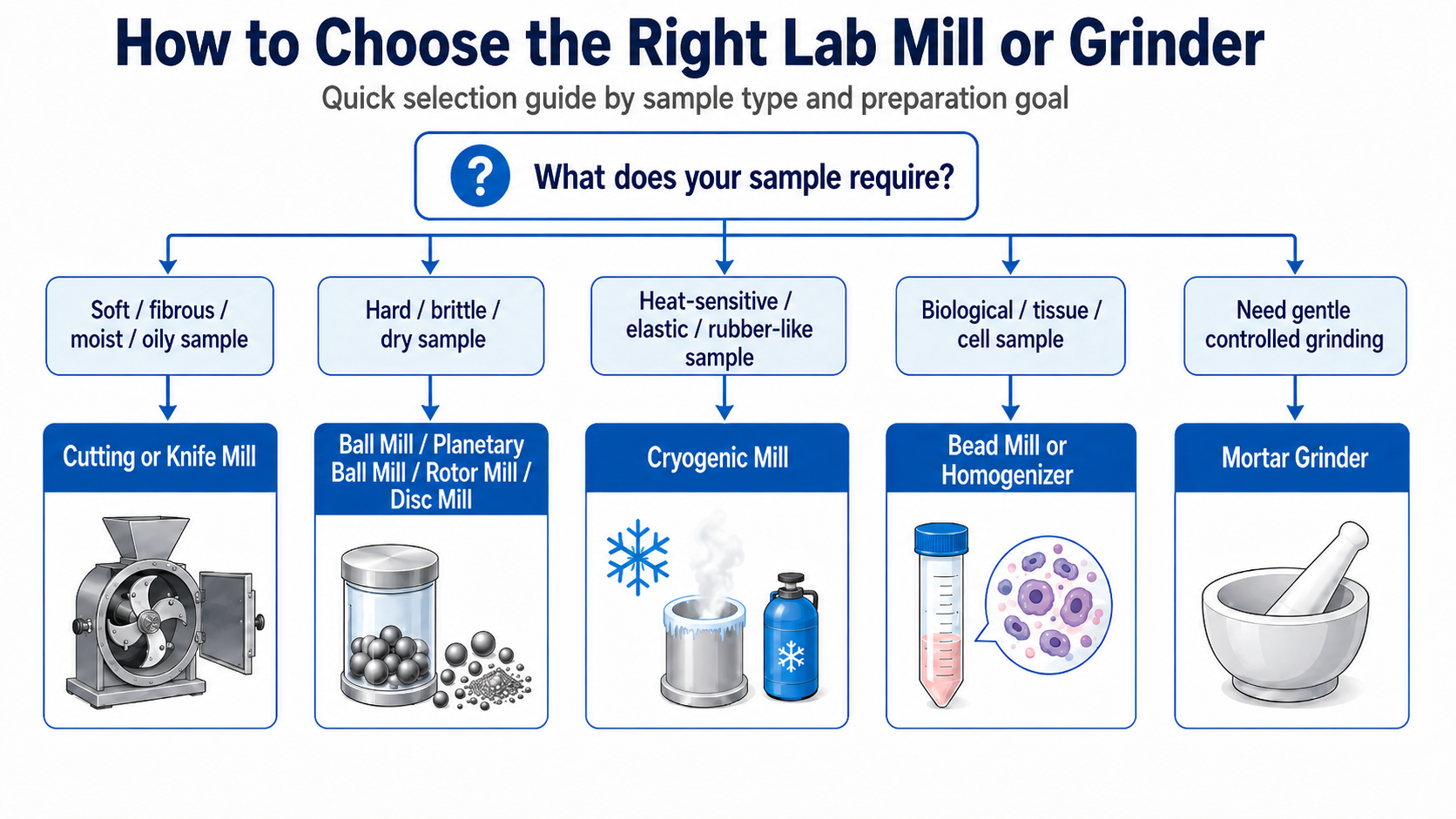
Reduction of raw materials into fine powders, achieved with Ball Mills, jet mills and other grinding methods. Physical or chemical properties can be improved by washing or separation processes. This ensures uniform particle size and removal of impurities, as well as can be critical for optimizing downstream processing, such as calcination, sintering, and for applications like Ceramic Additive Manufacturing (CAM).
3. Forming
The prepared materials are shaped into required geometry and size by methods such as injection molding, pressing etc.
4. Drying
After forming, the ceramics are dried carefully, in atmosphere or in Ovens, to remove moisture which helps to prevent cracking during fire.
5. Glazing
Before sintering, this step is introduced to the process. Oxides make up the glaze, which gives the product the ideal final appearance. Both spraying and dipping techniques can be used to apply the glaze.
6. Sintering
The dried ceramic product is fired in a Furnace at high temperature. In this process, the material solidifies, improving its durability and strength, and permanently harden and densify the material.
Heat treatment processes critical to ceramics manufacturing
Optimizing equipment selection and standard operating procedures for ceramics manufacturing is critical to competitiveness, and each step has unique goals and elements that must be kept in mind when selecting the best tool.
|
Type |
Purpose |
Conditions |
Best Equipment & Method |
|
Calcination |
Removal of volatile components, phase stabilization of powders, decomposition of carbonates or hydroxides. |
600–1200°C with optimal uniformity, controlled airflow or inert gas |
Rotary & Tilting Furnaces for continuous powder processing. Controlled Atmosphere muffle or Tube Furnaces for batch calcination. |
|
Binder Burnout (Debinding) |
Removal of organics at controlled ramp rates to prevent cracking, with oxygen or controlled atmosphere management |
Precise temperature ramps, which vary based on the chemistries targeted. |
Vacuum Degreasing or Tube Furnaces where the chamber may be replaced if contaminated, or furnaces equipped with a consumable retort or liner, and cold trap for protecting the vacuum and exhaust system. |
|
Sintering & Densification |
Grain growth and diffusion bonding for final mechanical strength development. Can involve atmosphere-sensitive reactions, particularly for high density or atmosphere-critical applications. |
Alumina: 1400–1700°C |
Varies based on method. Air-Stable, basic ceramics can be satisfied with a standard Muffle Furnace , while Atmosphere-Critical advanced ceramics can demand Rapid Ceramic Sintering not possible in traditional resistive furnaces, or Spark Plasma Sintering under pressure, temperature and vacuum or controlled atmosphere. |
Manufacturing Temperatures, Challenges, and Solutions for Industrial Ceramics
The ceramic manufacturing temperature varies depending upon the type of ceramic needed to manufacture. Some of the different ceramics, the temperatures required to fire them, as well as unique challenges production engineers and researchers may face when working with each, and solutions technology has developed around each, are as follows:
Silicon carbide ceramics
- Advantages: Offer very good heat stroke. Applicable in high temperature furnaces, EV Power Electronics. SiC MOSFETs and inverters, the backbone of next-gen electric vehicle powertrains, requiring defect-free material for high-voltage switching.
- The Processing Challenge: Preventing surface oxidation during sintering. Manufactured in the temperature range of 2200 - 2500°C.
- Solution: Specialized vacuum induction, Graphitization and Vacuum Carbon Tube Sintering Furnaces. These allow for precise Argon/Nitrogen gas regulation, preventing the "glassy" silica layer that ruins electrical conductivity in power modules.
Boron nitride ceramics
- Advantages: Provide very good electrical insulation and thermal conductivity, applicable in aerospace, semiconductor, and nuclear industries.
- The Processing Challenge: BN precursors require exteme purity, as well as manufacturing temperatures of 1900- 2300°C.
- Solution: Specialized vacuum induction and Vacuum Tungsten Sintering Furnaces. These may achieve temperature up to 2100°C, meeting the critical window for hexagonal BN crystallization, and prevent against “yellowing” or oxidation from trace oxygen during firing. Also ensuring high purity Jars and grinding media is critical during the particle size reduction stage.
Mullite ceramics
- Advantages: Features high temperature thermal shock resistance and minimal thermal expansion at a reasonable price point.
- The Processing Challenge: Mullite fibers require consistent calcination from 1300-1800°C.
- Solution: Furnaces, ideally calibrated to ISO 17025 or similar standards to ensure optimal accuracy, uniformity and performance.
Alumina ceramics
- Advantages: Largest market share due to its value as insulation, critical Nano-Alumina Coatings for Li-ion Battery Separators, as well as the primary substrate for LED Lighting and 5G RF modules. Essential to the electronics, automotive, and aerospace industries, to name a few.
- The Processing Challenge: Long cycle times for densification between 1600-1800°C, as well as for moisture removal from coated separator films.
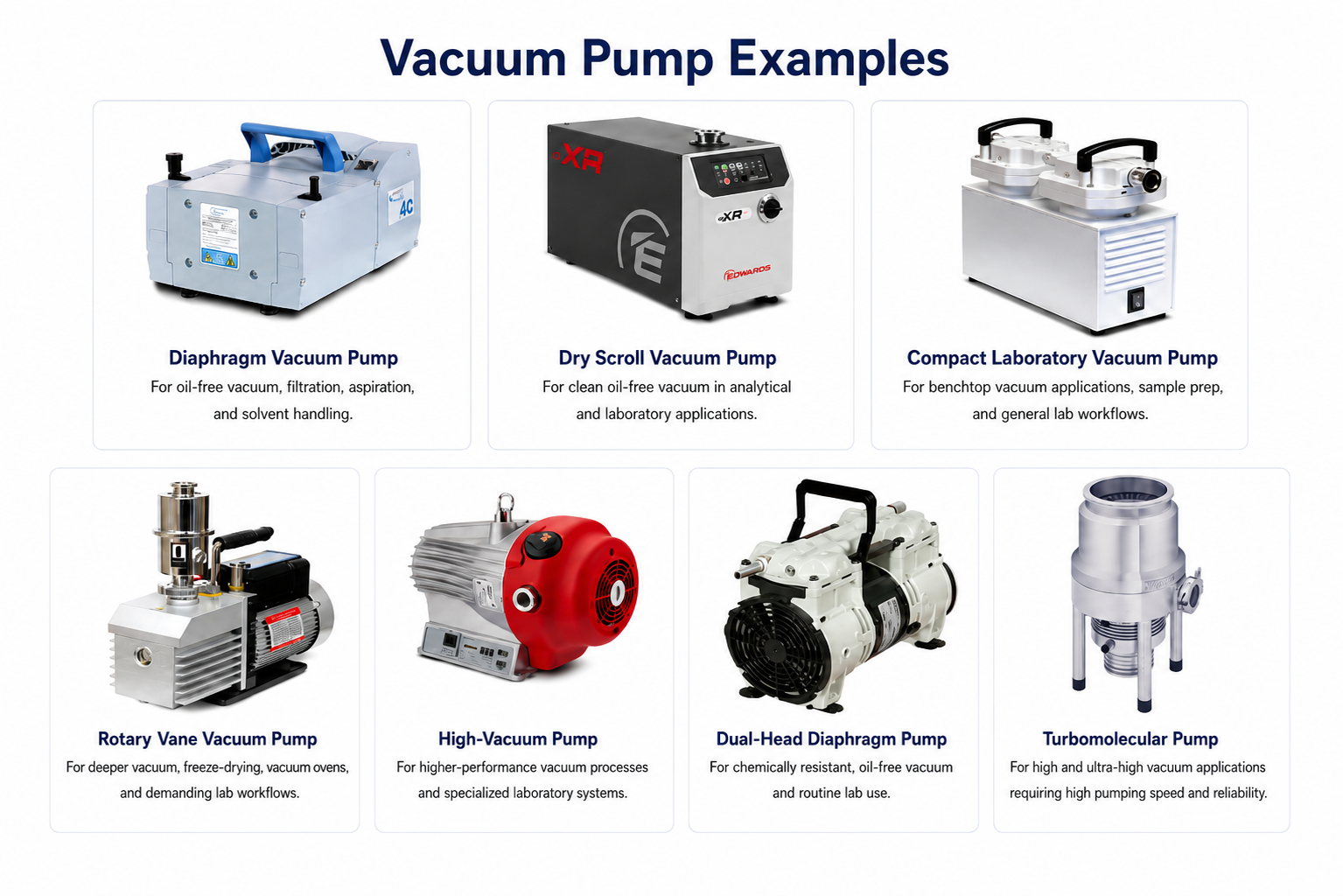
- Solution: Spark Plasma Sintering Furnaces can be employed for reducing cycle times for high-density alumina substrates, and Vacuum Oven with optimized vacuum pumping systems, and vacuum Controllers to optimize vacuum and venting cycles can gently yet efficiently remove moisture.
Zirconia ceramics
- Advantages: Known for very good resistance to cracking and chemistry, and can be manufactured in the temperature range of 1400-1600°C. for industrial, dental and medical devices, and particularly in vogue for New 4Y/5Y-PSZ generations for 3D-Printed Dental Implants and Crowns due to high translucency (aesthetics) combined with transformation toughness.
- The Processing Challenge: High demand and cost of input materials, as well as processing temperatures of 1400-1600°C
- Solution: Furnaces optimized to the type of sample being treated, as well as high quality input materials.
Challenges in ceramic manufacturing
During ceramic manufacturing, some common challenges may need to be confronted, including:
- The control of homogeneity, size, and composition of the raw material
- Controlling the water content during drying
- Achieving uniform sintering temperature
- Achieving uniform shaping in the step of forming
The Future of Advanced Ceramics: The 2026 Perspective
The landscape of advanced ceramics is shifting from traditional structural roles to becoming the primary enabler of high-growth industries like aerospace, semiconductors, and renewable energy. This evolution is driven by ceramics’ unique ability to maintain structural integrity under extreme heat and corrosive environments where metals and polymers fail.
- The Rise of Wide Bandgap (WBG) Semiconductors: Among the most significant disruptions is occurring in power electronics; the adoption of Silicon Carbide (SiC) and Gallium Nitride (GaN) accelerates, and these Wide Bandgap materials are replacing traditional silicon in different industry supply chains. Their ability to operate at higher voltages and temperatures allows for smaller, more efficient power inverters in electric vehicles (EVs) and 5G infrastructure. Processing these materials requires the extreme precision, such as that offered by a Vacuum Carbon Tube Sintering Furnace to ensure zero-defect crystal growth.
- Nano-Enhanced and Flexible Ceramics: Integration of graphene and nano-oxides is redefining the mechanical limits of ceramics, offering unprecedented thermal conductivity and fracture toughness. Flexible ceramics are essential for the next generation of wearable sensors and micro-batteries. Achieving these composite properties starts in the lab with Ball Mills, which ensure the perfectly uniform dispersion of nano-additives. Induction Heating Furnaces provide the ideal high temperature and vacuum conditions for graphene growth.
- Additive Manufacturing and CMCs: The rise of Ceramic Additive Manufacturing (CAM) and Ceramic Matrix Composites (CMCs) is streamlining production in industries from aerospace to energy storage, among some of their many industrial applications. Manufacturers may produce complex, high-density parts with minimal grain growth, while optimizing utilization of valuable input materials, and Vacuum Degreasing Sintering Furnaces may be used for removing binders critical to this process, while protecting valuable vacuum systems with cold trapping systems designed for the vapors produced during debinding cycles.
What equipment is necessary for creating ceramics?
Industrial ceramic production requires specialized machinery to handle every stage of the process. Each tool is critical to high-quality ceramics manufacturing and must be carefully selected, maintained as well as used with optimized standard operating procedures, made repeatable by programmable controllers that simplify data-logging and day to day operations.
|
Equipment |
Purpose |
|
Grinds materials into fine powders. |
|
|
Mixing Blenders |
Ensure uniform composition. |
|
Compresses powders into shapes. |
|
|
Slip Casting Molds |
Used for hollow and complex forms. |
|
Remove water without warping. |
|
|
Glazing Booths |
Apply coatings to formed ceramics. |
|
Harden ceramics through high heat. |
|
|
Inspection Table |
Ensures dimensional and structural quality. |
Choosing the right furnace for ceramic sintering
To achieve the desired product, choosing the right sintering furnace for ceramic manufacturing is crucial. The following are some guidelines to help you to choose the right furnace for your application.
- First, think about the type, size and volume of ceramic material you are going to sinter, as well as the temperature range, atmosphere control, and heating and cooling rates required, to choose the best heating technology between traditional resistive, induction and flash sintering, based upon your requirement.
- Ensure to select a furnace with safety mechanisms such as overheating prevention, PC interface for remote monitoring, from a company with a robust service infrastructure, comprehensive warranty, and consumable replacement parts such as heating elements, thermocouples, vacuum seals, tubes and insulation in stock.
- Think of your production volume, budget as well as cost of ownership for the equipment for a full picture of your investment.
- Consult with experts in related field.
Need help choosing the right sintering furnace? Contact our experts today for tailored solutions!
Why Choose Across International Furnaces?
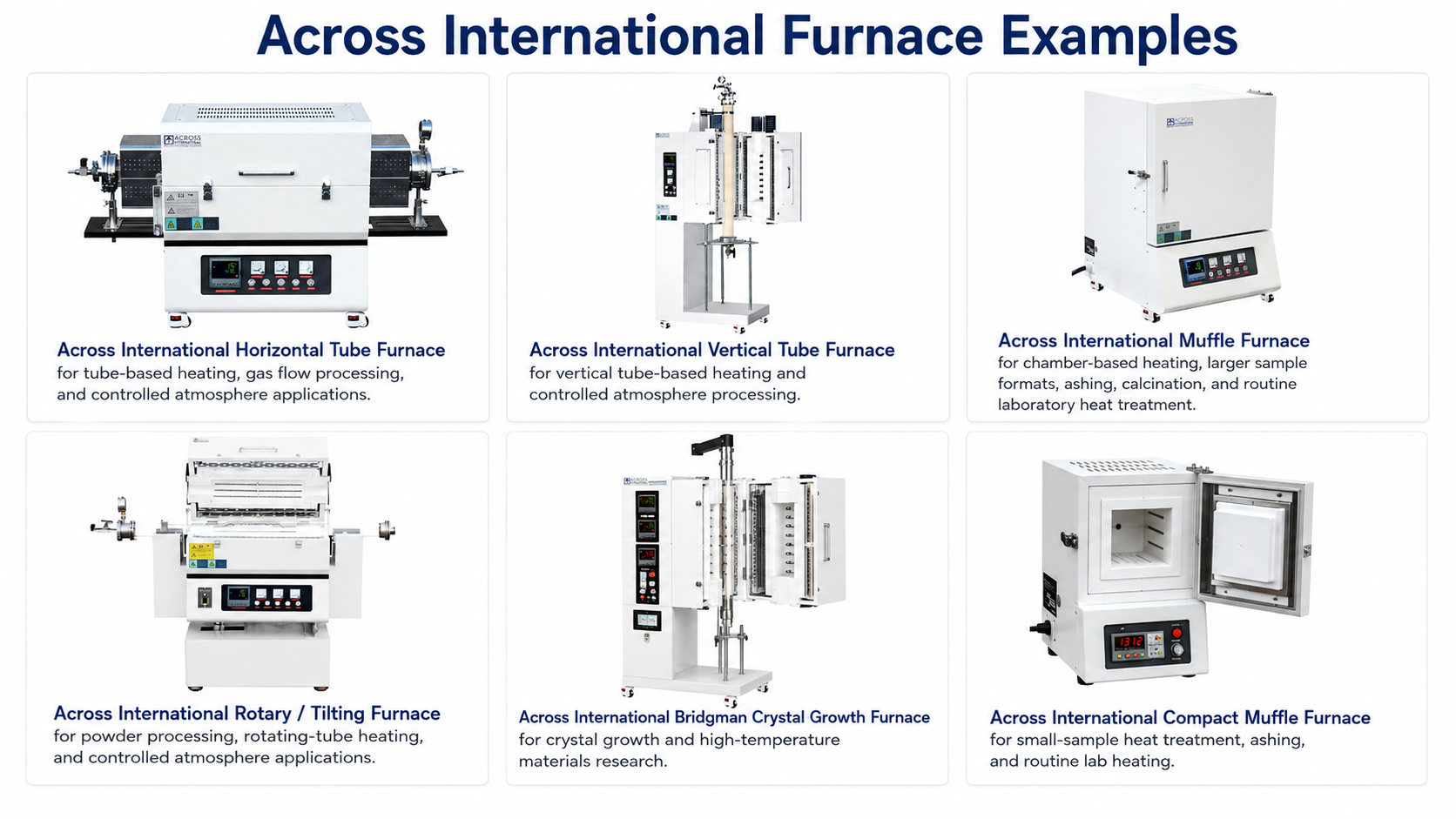
Across International is a trusted name in high-temperature processing, widely used in national laboratories, university laboratories, and production environments. When it comes to ceramics manufacturing, especially the critical furnace heat treatment phases and sintering, selecting the right furnace can define the quality, consistency, and performance of the final product, as well as cost of operation and overall success of the operation. Here's why Across International furnaces are a strong choice:
High Temperature Capability
- Models up to 3500°C available.
- Perfect for sintering alumina, zirconia, SiC, and other refractory ceramics.
Programmable Precision
- Multi-segment Eurotherm controllers PID feedback loops for advanced profiles, with iTools software and PC interface for real-time monitoring.
- Safety features, as well as NRTL certification for UL, CSA and CE for global compliance.
- ISO 9001:2015 manufacturer and accredited ISO 17025 temperature calibration laboratory, also offering NIST traceable vacuum sensor calibration.
Controlled Atmosphere Options
- Vacuum, inert gas (Ar, N₂, H₂) and Hydrogen compatibility for oxygen-sensitive materials.
- Optional vacuum and mass flow control systems for complete, optimized packages.
Perfect for Research & Scale-Up
- Benchtop, pilot and kilo-scale models.
- Uniform thermal zones and programmable control for reproducibility.
- Configurable for experimental versatility or small-batch manufacturing.
Across International Equipment for Ceramic Manufacturing
|
Furnace Type |
Model Series / Example |
Key Features |
Suitable Ceramic Processes |
|
Box Furnaces |
Max 1750 °C, programmable PID, vacuum/inert gas options
|
General sintering, binder burnout, grain coarsening |
|
|
Tube Furnaces |
Horizontal/split, up to 1750 °C, multi-zone uniformity, gas-tight flanges |
Calcination, thermal oxidation, controlled atmosphere sintering |
|
|
Rotary Tube Furnaces |
Continuous powder processing, ideal for granules or flowable ceramics |
Reactive sintering, thermal processing of ceramic powders |
|
|
Fast Sintering Furnaces |
Rapid thermal cycling (up to 100 °C/sec), compact quartz chamber |
Thin films, coatings, electro ceramics |
|
|
Preheating Flash Sintering |
Preheat + electric field activation, MoSi₂ elements, vacuum/inert capable ≤200℃/s |
Ultra-fast densification, field-assisted sintering, SOFCs, high-performance ceramics |
|
|
SPS (Spark Plasma Sintering) |
Up to 2500°C temp up to 50T pressure |
Nanomaterials, conductive ceramics |
Get what you need for successful ceramics processing
Contact your account manager for the furnace, ball mill, press or die you need for your laboratory:
888-988-0899
www.acrossinternational.com
We look forward to collaborating on ceramic solutions together!