

We use cookies to make your experience better. To comply with the new e-Privacy directive, we need to ask for your consent to set the cookies. Privacy Policy.
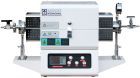
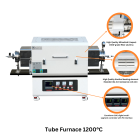
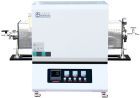
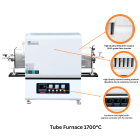
Tube furnaces are high-temperature heating systems designed to process materials inside a cylindrical work tube, enabling controlled heat treatment in air, under vacuum, in inert gas, or in controlled-atmosphere conditions.
A tube furnace is also commonly referred to as a tubular furnace, with these terms often used interchangeably depending on the application.
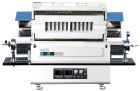
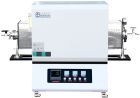
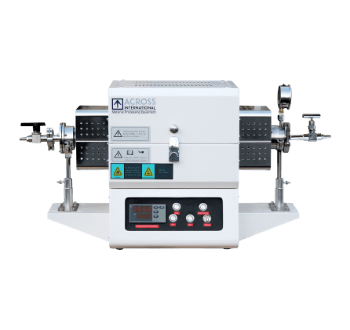
Across International horizontal tube furnaces are available in 1-zone, 2-zone, and 3-zone configurations, with temperature capability up to 1,800°C. Options include split tube designs and tube materials such as quartz and ceramic, allowing engineers to match the furnace configuration to process temperature, atmosphere requirements, sample geometry, and thermal uniformity needs.
Horizontal Tube Furnaces
Tube furnaces are high-temperature heating systems designed to process materials inside a cylindrical work tube, enabling controlled heat treatment in air, under vacuum, in inert gas, or in controlled-atmosphere conditions.
A tube furnace is also commonly referred to as a tubular furnace, with these terms often used interchangeably depending on the application.
Across International horizontal tube furnaces are available in 1-zone, 2-zone, and 3-zone configurations, with temperature capability up to 1,800°C. Options include split tube designs and tube materials such as quartz and ceramic, allowing engineers to match the furnace configuration to process temperature, atmosphere requirements, sample geometry, and thermal uniformity needs.
Frequently Asked Questions
What is a tube furnace used for?
A tube furnace is used for heating samples inside a cylindrical tube under controlled temperature and atmosphere conditions. It is commonly used in research, materials processing, and laboratory-scale heat treatment.
What are the advantages of a tube furnace compared to other furnace types?
Tube furnaces offer precise temperature control, uniform heating, and the ability to run processes under vacuum or in controlled gas environments, making them ideal for sensitive applications.
What materials can be processed in a tube furnace?
They are widely used for ceramics, powders, metals, thin films, and advanced materials that require controlled heating conditions.
Can a tube furnace operate under vacuum or controlled atmosphere?
Yes, most tube furnaces can be configured to operate under vacuum or with gases such as argon, nitrogen, or hydrogen, depending on the application.
What temperature range do tube furnaces typically support?
Tube furnaces are available in a wide range of temperatures, from low- to very high-temperature systems, depending on the heating elements and tube material.
What is the difference between single-zone and multi-zone tube furnaces?
Single-zone furnaces heat one section uniformly, while multi-zone furnaces allow independent temperature control across different sections, improving uniformity and process flexibility.
What types of tubes are used in tube furnaces?
Tube furnaces use different types of tubes depending on the temperature, atmosphere, and chemical compatibility required for the process. Common tube materials include quartz, alumina, mullite, and metal tubes.
What are common issues when using a tube furnace?
Typical issues include uneven temperature distribution, especially near the tube ends. Due to thermal shock or improper heating/cooling, tube cracking may occur. In addition, tube contamination from previous runs can affect sensitive samples.
Why is my tube furnace not maintaining temperature or atmosphere?
This may be caused by faulty heating elements, poor insulation, leaks in the system, or incorrect gas flow settings. Regular checks are important for stable operation.
What should I consider before choosing a tube furnace?
Before choosing a tube furnace, you should match the system to your process requirements, operating conditions, and materials. Important factors include maximum working temperature, heating zone length, tube material and diameter, atmosphere compatibility, and whether single-zone or multi-zone control is needed.