

We use cookies to make your experience better. To comply with the new e-Privacy directive, we need to ask for your consent to set the cookies. Privacy Policy.
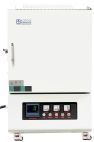
Muffle furnaces are high-temperature heating systems designed to process materials in a controlled, enclosed chamber without direct exposure to flame or combustible gases.
They are commonly referred to as chamber furnaces or box furnaces, with these terms often used interchangeably depending on the application.
These systems are widely used in laboratories, R&D environments, and industrial facilities for materials science, ceramics, metallurgy, chemical analysis, and pharmaceutical applications. A laboratory muffle furnace is typically used for ashing, heat treatment, calcination, ignition testing, and material analysis, while high-temperature muffle furnace models support more demanding processes requiring elevated thermal performance.
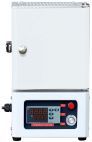
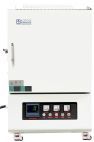
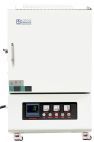
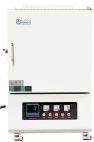
Across International muffle furnaces offer a reliable and efficient solution for high-temperature processing. These compact, front-loading, box-style furnaces use Mitsubishi alumina-fiber insulation and heating elements selected for each model’s temperature range, supporting durability and consistent performance. All systems feature a dual-layer internal housing designed to maintain excellent temperature uniformity and process stability. Popular applications include glass fusing, enamel coating, heat treatment, ashing, ignition, and combustion testing.
Muffle Furnaces
Muffle furnaces are high-temperature heating systems designed to process materials in a controlled, enclosed chamber without direct exposure to flame or combustible gases.
They are commonly referred to as chamber furnaces or box furnaces, with these terms often used interchangeably depending on the application.
These systems are widely used in laboratories, R&D environments, and industrial facilities for materials science, ceramics, metallurgy, chemical analysis, and pharmaceutical applications. A laboratory muffle furnace is typically used for ashing, heat treatment, calcination, ignition testing, and material analysis, while high-temperature muffle furnace models support more demanding processes requiring elevated thermal performance.
Across International muffle furnaces offer a reliable and efficient solution for high-temperature processing. These compact, front-loading, box-style furnaces use Mitsubishi alumina-fiber insulation and heating elements selected for each model’s temperature range, supporting durability and consistent performance. All systems feature a dual-layer internal housing designed to maintain excellent temperature uniformity and process stability. Popular applications include glass fusing, enamel coating, heat treatment, ashing, ignition, and combustion testing.

Frequently Asked Questions
What is a muffle furnace used for?
A muffle furnace is used to heat samples at high temperatures in an enclosed chamber without direct flame contact. Muffle furnaces are commonly used in research laboratories, ceramic processing, and metallurgical applications for calcination, heat treatment, annealing, ashing, burning off organics, and material testing.
How does a muffle furnace work?
A muffle furnace works by heating a sample inside a closed, insulated chamber, the “muffle,” that isolates it from direct contact with the heating elements and combustion gases. Electric heating elements embedded in the furnace walls generate heat, which is then transferred to the chamber by radiation and convection, creating a uniform high-temperature environment. Because the sample sits inside this enclosed chamber, it experiences clean and controlled heating.
Why are muffle furnaces widely used in laboratories?
They are simple to operate, cost-effective, reliable, and well-suited for routine tasks such as sample preparation, ash content testing, and general material analysis.
What temperature range can a muffle furnace reach?
Most laboratory muffle furnaces operate from moderate to high temperatures, depending on the design and type of heating element. Across International’s muffle furnace models can reach very high temperatures up to 1750°C.
How uniform is the temperature inside a muffle furnace?
Temperature is generally uniform, but it can vary depending on chamber loading, sample placement, and furnace size. Across International’s muffle furnaces achieve temperature uniformity of ±1°C.
What is the difference between a muffle furnace and a standard furnace?
A muffle furnace isolates the sample from direct heat sources and combustion gases, while standard furnaces may expose materials directly to flame or the process atmosphere.
What is the difference between a muffle furnace and an ashing furnace?
An ashing furnace is typically a type of muffle furnace optimized for burning off organic material. The main difference lies in application and airflow control rather than basic design.
What are common problems when using a muffle furnace?
Typical issues include long heating and cooling times, slight temperature variation, and limited control over the atmosphere compared to vacuum or gas furnaces.
Why do results vary between runs in a muffle furnace?
Variations can come from differences in sample size, placement, loading conditions, or non-uniform temperature. Consistent setup helps improve repeatability.
What should I consider before buying a muffle furnace?
Key factors include temperature range, chamber size, heating/cooling rate, control system, such as a programmable controller, safety features, and how well it fits your typical workload.