

We use cookies to make your experience better. To comply with the new e-Privacy directive, we need to ask for your consent to set the cookies. Privacy Policy.
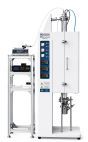
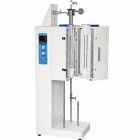
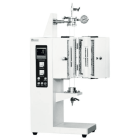
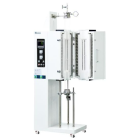
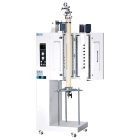
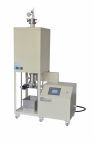
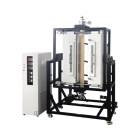
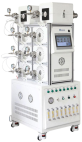
Vertical tube furnaces are high-temperature thermal processing systems designed for applications where samples or materials are processed inside a vertically oriented work tube. A vertical furnace configuration is useful when the process requires suspended sample positioning, gravity-assisted material movement, reduced contact with support fixtures, or controlled gas flow through the heated zone.
Across International vertical tube furnaces support laboratory, R&D, pilot-scale, and industrial applications in materials science, battery research, nanotechnology, ceramics, metallurgy, and chemical processing. Available configurations help engineers match temperature range, tube material, atmosphere control, sample geometry, and thermal uniformity requirements.
Vertical Tube Furnaces
Vertical tube furnaces are high-temperature thermal processing systems designed for applications where samples or materials are processed inside a vertically oriented work tube. A vertical furnace configuration is useful when the process requires suspended sample positioning, gravity-assisted material movement, reduced contact with support fixtures, or controlled gas flow through the heated zone.
Across International vertical tube furnaces support laboratory, R&D, pilot-scale, and industrial applications in materials science, battery research, nanotechnology, ceramics, metallurgy, and chemical processing. Available configurations help engineers match temperature range, tube material, atmosphere control, sample geometry, and thermal uniformity requirements.

Frequently Asked Questions
What is a vertical tube furnace used for?
A vertical tube furnace is a high-temperature furnace with a vertically oriented tube for controlled heating and uniform temperature distribution. It is used when the position of the sample matters, especially when gravity plays a role in the process. It is commonly used for crystal growth, powder processing, sintering, and oxidation studies when the materials need to be suspended or dropped during heating.
When is vertical better than horizontal?
A vertical tube furnace is better than a horizontal one when the process benefits from gravity, vertical sample handling, and uniform gas flow, as well as when materials need to move or settle in a certain direction during heating.
What problems come up?
• Sample position and stability can be challenging when suspending materials
• Gas flow control can be more sensitive
• It requires enough height in the lab
• Gas flow control can be more sensitive
• It requires enough height in the lab
What materials can be processed in these furnaces?
Vertical tube furnaces are suitable for semiconductors, metals, powders, and ceramics.
What temperature range can a vertical tube furnace reach?
Depending on the design, type of tube material, and heating elements used, Across International’s vertical tube furnace models can reach very high temperatures up to 1700°C.