










Frequently Asked Questions
Got Questions? We’ve Got Answers
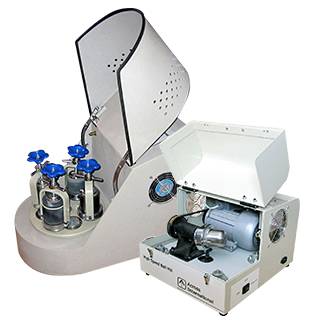
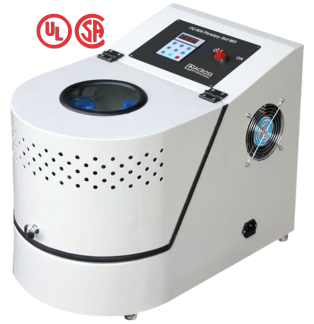
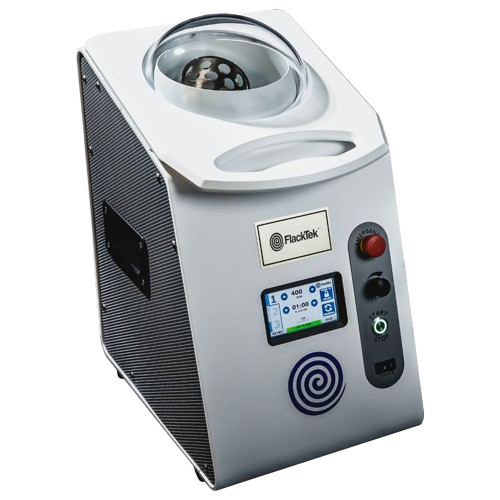
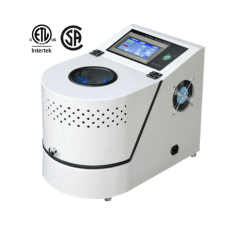
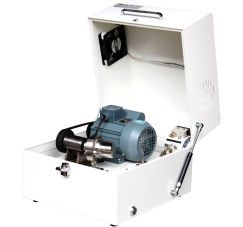
A ball mill is a type of blender or grinder that is used for mixing materials, sample preparation, and fine grinding in battery materials, ceramics, ore, metallurgy, chemicals, and pharmaceutical applications. Ball mills work by using friction and impact from the moving grinding media, or balls, to break down materials into fine powder.
The most common types of ball mills include planetary ball mills, vibratory and stirred ball mills, and overflow and grate-type mills, with planetary ball mills being used for high-energy grinding to achieve micro- to nanoscale particles.
Better options for wet versus dry milling depend on the type of material and application. Wet ball milling is best for handling sticky materials and achieving a more uniform fine particle size, whereas dry milling is preferred for simple processes and moisture-sensitive materials.
The grinding efficiency of ball mills can be improved by using proper ball loading, mixing, and adjusting the appropriate speed of rotation. The amount of ball loading should be one-third of the drum, the maximum speed of rotation should be between 60 and 75% of the mill’s critical speed, and small and large balls should be mixed together to balance high impact force with greater surface-area contact.
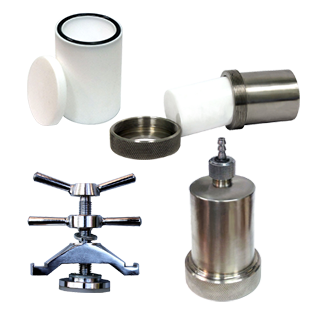
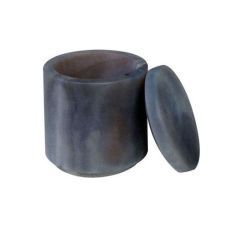
Ball mill grinding media are commonly made from alumina, agate, zirconia, steel, graphite, and tungsten, depending on the material’s hardness, contamination sensitivity, and grinding efficiency.
Ball mills can process a wide range of materials that are brittle, fibrous, or semi-hard. Common examples are ceramics, metals, chemicals, battery materials, and minerals, with feed sizes up to approximately 20 mm reduced down to fine particle sizes in the micrometer range.
High ball consumption is generally caused by incorrect loading proportions and poor steel quality, which can be reduced by using high-quality cast or forged steel balls and optimizing the ball load proportion by choosing larger balls for harder materials and smaller balls for finer materials.
Rod mills and ball mills differ in their grinding media and resulting particle size. Rod mills use steel rods for line contact, making them suitable for coarser products and preventing overgrinding, whereas ball mills use spherical balls, which create point contact and are ideal for fine grinding. Both are used for grinding materials.
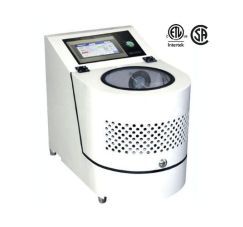
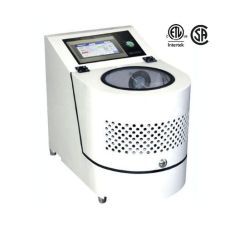
Across International ball mills offer digital controllers for controlled operation, high-energy grinding, compatibility with various materials, flexible operation, including wet, dry, vacuum, and inert gas processing, two-way rotation, clockwise and anticlockwise, and micrometer-size particle reduction, making them promising solutions for laboratory research and advanced materials processing applications.
A ball mill may not reach the desired fineness because of incorrect ball speed or fill level or the use of an incorrect ball size.
Excessive vibration and noise may arise from an uneven distribution of grinding media, bearing failure, loose liner bolts, and worn gears.
-
 Trusted ISO 9001 Manufacturer ISO/IEC 17025:2017 certified calibration lab
 -
Trusted by 100K Universities & Companies Over 1000+ Scientific Papers Cited
-
12-hour Technical Support Available Mon–Fri, 8 AM to 8 PM & In-house testing
-
Price Match Matches qualified U.S. competitor prices


