

We use cookies to make your experience better. To comply with the new e-Privacy directive, we need to ask for your consent to set the cookies. Privacy Policy.
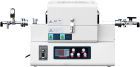
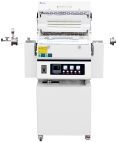
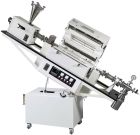
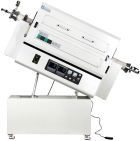
Rotary furnace systems are high-temperature thermal processing units designed to heat materials inside a rotating tube or kiln.
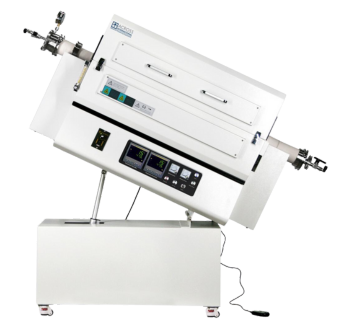
Across International offers rotary and tilting furnaces with single-zone and multi-zone heating, Mitsubishi alumina fiber insulation, and Eurotherm temperature controllers.
Available configurations allow users to match the system to process temperature, atmosphere, material geometry, rotation speed, and unloading requirements.
Rotary & Tilting Furnaces
Rotary furnace systems are high-temperature thermal processing units designed to heat materials inside a rotating tube or kiln.
Across International offers rotary and tilting furnaces with single-zone and multi-zone heating, Mitsubishi alumina fiber insulation, and Eurotherm temperature controllers.
Available configurations allow users to match the system to process temperature, atmosphere, material geometry, rotation speed, and unloading requirements.
Frequently Asked Questions
What is a rotary tube furnace used for?
A rotary tube furnace is used for continuous heat treatment and processing of powders and granular materials. The rotating tube ensures uniform mixing and heating. Rotation prevents particles from sticking and improves heat transfer, making it suitable for processes such as sintering, drying, and calcination.
How is a rotary tube furnace different from a standard tube furnace?
Unlike a fixed tube furnace, a rotary tube furnace rotates the tube during operation. This improves material mixing, heat distribution, and process consistency, especially for powders.
What materials are typically processed in a rotary tube furnace?
It is commonly used for metal powders and alloys, granules, catalysts, ceramics, battery materials, chemical powders, and carbon-based materials that require uniform heating and controlled processing.
What are the advantages of using a rotary tube furnace?
Key benefits include:
• Improved temperature uniformity
• Continuous material movement
• Better reaction consistency
• Reduced powder agglomeration
• Improved temperature uniformity
• Continuous material movement
• Better reaction consistency
• Reduced powder agglomeration
Can a rotary tube furnace operate under a controlled atmosphere or gas flow?
Yes, these furnaces can operate with inert or reactive gases such as nitrogen, argon, or hydrogen, depending on the process requirements.
What applications are best suited for rotary tube furnaces?
Rotary tube furnaces are used for applications such as calcination, drying, sintering, thermal decomposition, and material activation in both research and industrial processes. Typical applications include chemical powder processing, battery material production, and ceramic processing.
What temperature range do rotary tube furnaces support?
Temperature capability depends on the furnace design and heating elements, but they are generally suitable for a wide range of medium- to high-temperature applications.
What are common issues when operating a rotary tube furnace?
Common challenges include misalignment of the tube, which can lead to non-uniform heating and inconsistent mixing. Material sticking inside the tube can also occur with fine powders. Proper setup and maintenance are important.
Why does my rotary tube furnace not maintain consistent processing results?
If your rotary tube furnace does not give consistent results, it usually results from variations in rotation, gas flow, temperature, feed rate, or particle size inside the tube. Even a small temperature gradient along the tube can lead to uneven sintering. Inconsistent rotation or poor tube alignment can cause irregular mixing, resulting in inconsistent results.
What should I consider before choosing a rotary tube furnace?
Before choosing a rotary tube furnace, you should ensure it matches your process requirements, material type, and production scale. Other important factors include maximum working temperature, heating zone length, tube material and diameter, atmosphere compatibility, and whether single-zone or multi-zone control is needed.