

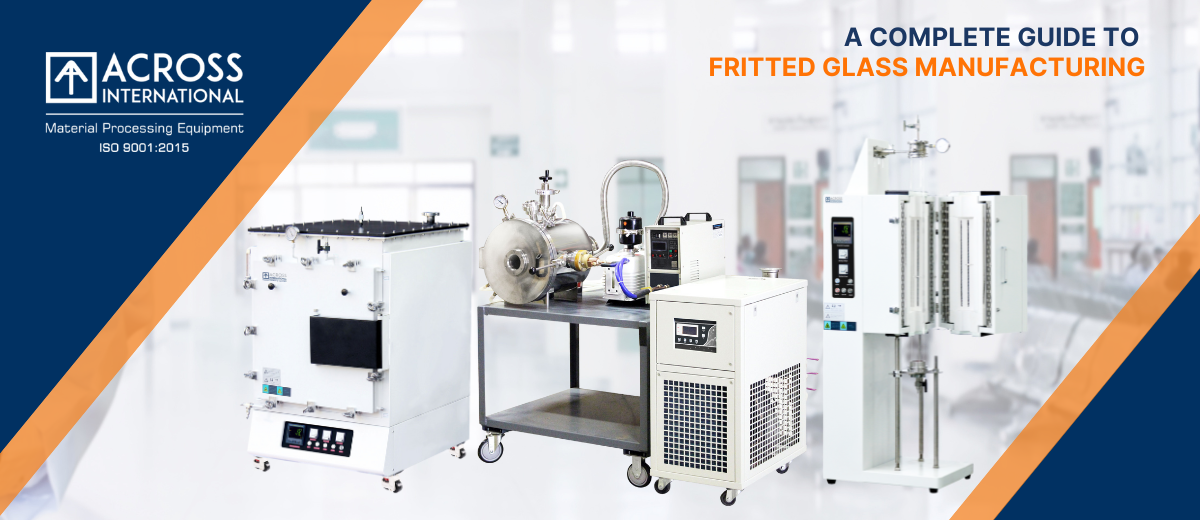
A Complete Guide to Fritted Glass Manufacturing
Introduction to Fritted Glass
A frit glass or fritted glass is a type of glass that is porous enough to pass liquid or gas through it. Fritted glasses are a common material in the industry and can be made by sintering glass and ceramic particles into a porous solid body. Some frit is prepared in a glass furnace. The fritted glasses are durable and resilient due to the fusing of frit glass layer to the glass surface at the time of manufacturing. Frit layer can be made patterned, porous, and colored based on its need. Frit glasses have been widely used in various applications such as manufacturing different types of glass, electronics, architectural design, and laboratory applications.
What are fritted glasses used for?
The frit glasses are broadly used in a diverse of industries due to their versatility, customizable surface properties, and durability. Among them, some are as follows:
1. Industrial and scientific use
Used as filters or porous structures for precise fluid or gas flow. Example, fritted glass funnels, crucibles, filter discs in analytical chemistry and chromatography.
2. Architectural and building applications
a. Energy efficiency and sun control: Used to reduce solar radiation. Example, fritted glass in building facades, skylights, atriums, and sunshades.
b. Privacy and screening: To obscures visibility while allowing light transmission. Examples, office partitions, bathroom enclosures, glass doors.
3. Automotive and transportation
a. Ceramic frit borders: To protect edges of laminated windshields from UV degradation and provides a bonding surface for adhesives. Examples, car windshields, train and bus windows.
b. Glare and heat management: Vehicle roof panels, sunroofs, and side glazing to reduce interior temperature and glare.
How to manufacture fritted glasses?
The nature of the furnace plays a pivotal role in frit glass manufacturing to make sure that the frit is properly bonded, and the product meets the performance standard. Uniform heating assures the evenly melting of frit, maintaining structural integrity and pattern clarity. The following are the step-by-step processes for fritted glass manufacturing:
Step 1
Frit preparation: First of all, prepare a frit (powdered glass). It may be metal oxides, ceramic pigments depending upon the application.
Step 2
Glass cleaning: The base glass sheet is thoroughly cleaned to remove dust, oil, and residues.
Step 3
Frit application: Frit is applied to the glass surface using one of following methods:
- Screen Printing (most common): Frit paste is printed in patterns (dots, lines, gradients, etc.).
- Spraying or Rolling: For full or gradient coverage.
- Scanning: Allows for photo-realistic images or precise graphics.
Step 4
Desiccating: The printed glass is dried at 150–250°C to remove solvents and bind the frit in place before firing.
Step 5
Firing in a furnace:
- The fritted glass is sent through a tempering furnace (610 to 700°C).
- Frit particles become soft and fuse into the glass without melting the substrate.
- This creates a chemically bonded surface which is weather and scratch resistant.
Step 6: Ceramic particles are deposited on the glass to create desired patterns of fritted glass
Step 7:
Cooling and post-processing: The glass is cooled either,
- Quenching if tempered safety glass is needed.
- Annealing for decorative or non-load-bearing applications.
Step 8: Inspecting the glass for quality standards and any imperfections.
Finally, it is optional, laminating, cutting, or edge polishing can follow, depending on the application.
Some technical terms used in fritted glass manufacturing
Frit: Finely ground ceramic or glass powder
Glaze: A thin layer of silica-based material combined with fluxes or oxides that melt during sintering, used as a waterproof surface in ceramics and pottery, screen printing, electrical insulation and weather resistance
Optical haze: light scattering caused by surface irregularities
Ceramic pigment: Heat resistant pigments mixed with frit to impart color that won’t burn off during sintering
Sintering: a process where powdered material is heated below its melting point until particles bond together used to form porous frit structure.
Quenching: Rapid cooling process used in tempering to lock in surface tension and strengthen the glass
What are the types of furnaces used in frit glass manufacturing?
Selecting the right furnace is essential for quality ceramic frit glass manufacturing. Different furnace types accommodate different needs:
|
Roller Furnace |
Frit fusion |
550–700°C |
Flat glass panels (mass production) |
|
Batch Kiln |
Frit fusion |
500–750°C |
Custom and low-volume production |
|
Horizontal Tempering |
Strengthening (post-fusion) |
620–680°C |
Safety/tempered fritted glass |
|
Annealing Furnace |
Stress relief |
Gradual cooling |
Non-tempered fritted glass |
|
Muffle Furnace |
Porous frit ware (sintering) |
700–1000°C |
Laboratory filters and frit ware |
What should be the furnace features in fritted glass manufacturing?
The furnace is the heart of the fritted glass production process. It not only heats the glass but also determines the consistency, quality and stability of the final product. The following are the significant furnace features that directly impact the success of fritted glass manufacturing:
|
Furnace feature |
Why it matters |
|
Uniform heat control |
Ensures constant heating of ceramic and glass during sintering process, which is important for achieving desired structural integrity and porosity. |
|
Convection Heating System |
Delivering even heating, especially critical for printed glass, minimizes risk of burning and ensures accurate pattern retention. |
|
Precise Temperature & Zone Control |
Allow customized heating profiles for various frit types and glass sizes; essential for consistent, high-quality results. |
|
Fast & Controlled Heating/Cooling |
Supports efficient production; rapid cooling for tempered glass, controlled cooling for annealed applications. |
|
Glass Size & Load Handling Capacity |
Accommodates large panels or multiple sheets; wide furnace beds and stable roller systems prevent handling damage. |
|
Energy Efficiency |
Reduces operating costs through better insulation, optimized airflow, and heat recovery systems. |
|
Programmable Logic Controllers (PLCs) |
Enables automation, precise adjustments, and consistent quality with minimal manual intervention. |
Challenges in fritted glass manufacturing
Fritted glass manufacturing faces various challenges. Some of them are as follows:
Poor adhesion: Improper sintering or inadequate cleaning can lead to poor binding due to the presence of other impurities.
Inconsistent porosity: Variation in frit size and sintering temperature may impact in filter performance.
Optical defect: Some of the issues like uneven color pattern or haze may impact on the visual quality of fritted glass
Pattern integrity issue: High temperature distortion can deform printed frit design.
If you're interested in learning more about fritted glass manufacturing furnaces, Across International, the team will guide you to select the right furnace for your application.
Why Choose Across International Furnaces?
Across International (Ai Furnaces) is a trusted name in high-temperature processing, widely used in national laboratories, university laboratories, and production environments. When it comes to fritted glass manufacturing, especially for sintering, selecting the right furnace can define the quality, consistency, and performance of the final product. Here's why Across International furnaces are a strong choice:
Proven Track Record
With more than 30 years of industry experience, we have delivered our equipment to various universities, research laboratories and industrial facilities. These connections underscore our reputation as a trusted supplier of laboratory equipment in the USA and worldwide.
Customer Support and Services
Our experienced team is readily available to provide prompt and effective support to ensure you have the right tools and your equipment is always at peak performance. Whether you need help selecting and setting up your equipment or resolving any technical issues, our team is here to ensure the success of your operations.
Quality and Reliability
Across International is an ISO-certified manufacturer, which means our supplies are designed to meet stringent quality industry standards. All the equipment in our selection is manufactured according to ISO standards to ensure consistency, accuracy, and safety of your operations.
High Temperature Capability
- Models up to 3500°C available
- Perfect for sintering alumina, zirconia, SiC, and other refractory ceramics
Programmable Precision
- Multi-segment controllers for advanced profiles
- PID feedback loops for temperature control
- Safety interlocks for real-time monitoring
Controlled Atmosphere Options
- Inert gas compatibility (Ar, N₂, H₂)
- Vacuum-compatible versions for oxygen-sensitive materials
Perfect for Research & Scale-Up
- Benchtop and pilot-scale models
- Uniform thermal zones for reproducibility
- Configurable for experimental versatility or small-batch manufacturing
Across International Furnaces for Fritted Glass Manufacturing
|
Furnace type |
Key features |
Why it’s useful for fritted glass (especially in R&D, prototyping, or specialty production) |
|
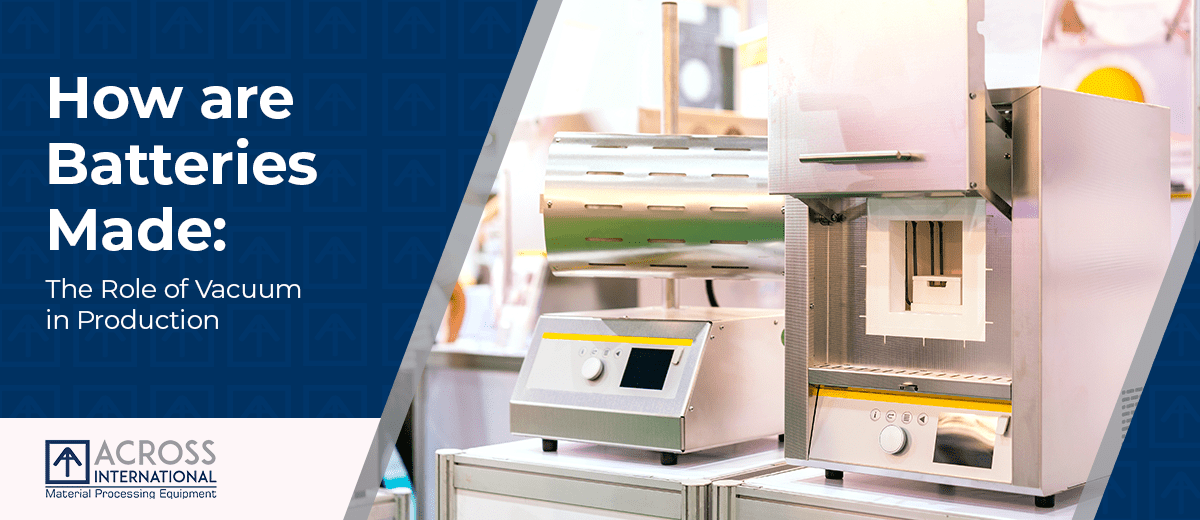
- Operates in high vacuum or inert gas - Extremely high temperature capability - Clean processing environment |
- Ideal for preparing custom ceramic frits or metal-oxide frit powders under contamination-free conditions. - Useful when frit includes reactive elements or needs high purity. |
|
|
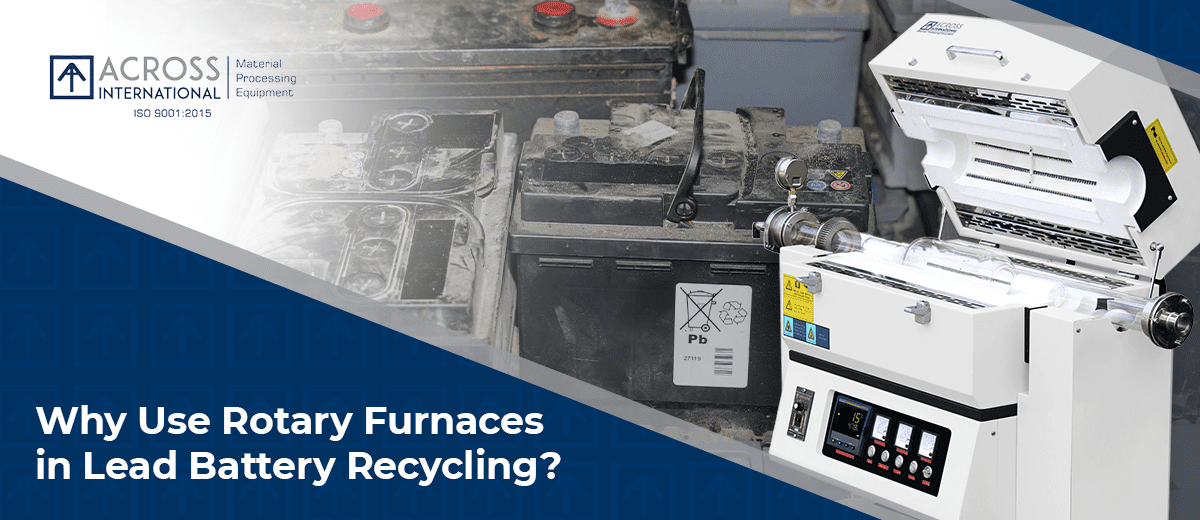
- Inert, reducing, or reactive gas flow (e.g., N₂, Ar, H₂) - Precise atmospheric control |
- Allows testing and fusion of frit that require specific atmospheric conditions. - Prevents oxidation or promotes specific chemical bonding in frit-glass interaction. - Useful in color tuning, especially for metallic or functional frit (e.g., conductive, solar control). |
|
|
- Excellent for thermal gradient studies - Ideal for small cylindrical samples - Precise zone heating |
- Suitable for frit behavior analysis (melting, flow, adhesion) on curved or coated samples. - Used in research for understanding thermal behavior and structural changes in fritted layers. - Good for coating studies, such as frit-glass interface bonding. |
Conclusions
Fritted glass manufacturing combines material science, engineering, and artistic design to produce various types of glass products used across architecture, electronics, and scientific applications. By fusing ceramic or glass frit onto a substate, manufacturer can achieve customized functionality ranging from solar control to safety and filtration performance. While the process faces some challenges such as thermal stress, adhesion quality, digital printing, and innovation in furnace technology continue to enhance efficiency and product reliability. As the demand for high performance glazing solution grows, fritted glass remains a promising material in modern engineering and design.
Frequently Asked Questions (FAQs) About Fritted Glass Manufacturing
1. What temperature is needed to fuse frit to glass?
In order to effectively bond frit to glass, the firing temperature will typically be between 610°C and 700°C. This temperature melts the frit sufficiently so that it will adhere to the surface, but will not melt the glass beneath, and the printed design or pattern will be preserved.
2. Why does frit sometimes fail to stick to glass?
Failure of adhesion will usually reduce to a couple of straightforward problems: The glass was not properly cleaned before frit application; The firing temperature was not high or uniform enough; The frit powder itself could have the wrong composition or particle size; Or be contaminated by dust, oil, or moisture.
3. Can fritted glass be tempered?
After the frit is fused to the glass, the whole piece can undergo a tempering process, involving a quick cooling. This makes the glass considerably stronger—about 4 to 5 times more impact-resistant than standard annealed glass—well-suited for safety-minded applications like building facades, doors, and windows.
4. What’s the difference between tempered and annealed fritted glass?
Tempered fritted glass is quenched quickly after heating, and this renders it extremely strong and less prone to shattering—good enough for safety-critical use like storefronts, facades, or any heavily trafficked area.
Annealed fritted glass, on the other hand, is cooled slowly. It's less strong but still durable, making it a better fit for decorative or low-impact use where safety glass won't be required.
5. How do you choose the right furnace for fritted glass manufacturing?
It will rely on several factors: Glass size and production volume; Strength requirements (tempered or annealed glass?); Design complexity (intricate prints might need accurate control); Atmospheric requirements (some frits require vacuum or inert gas atmospheres); Energy efficiency and automation potential.