
What is a Muffle Furnace?
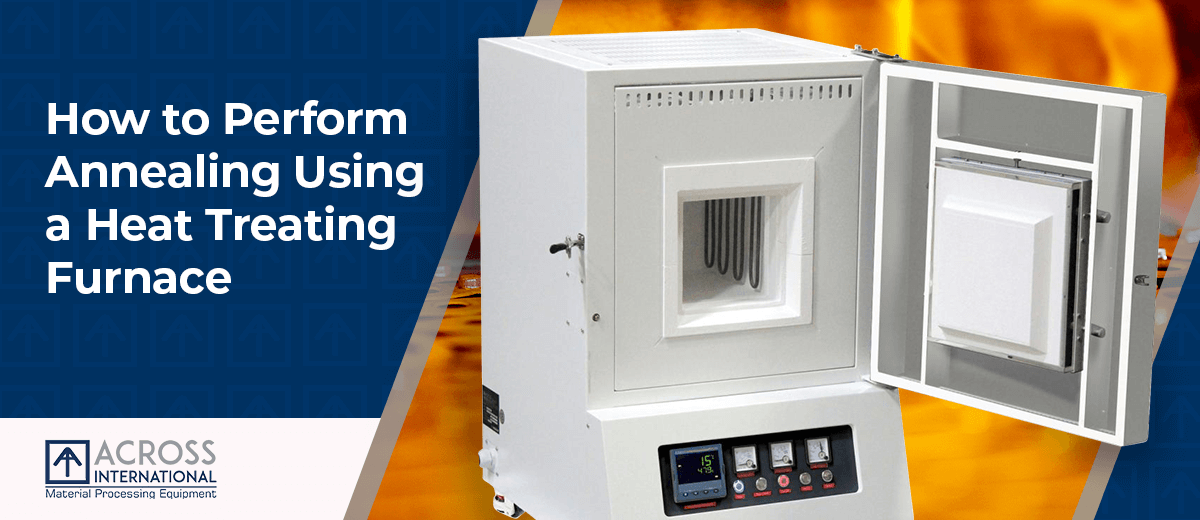
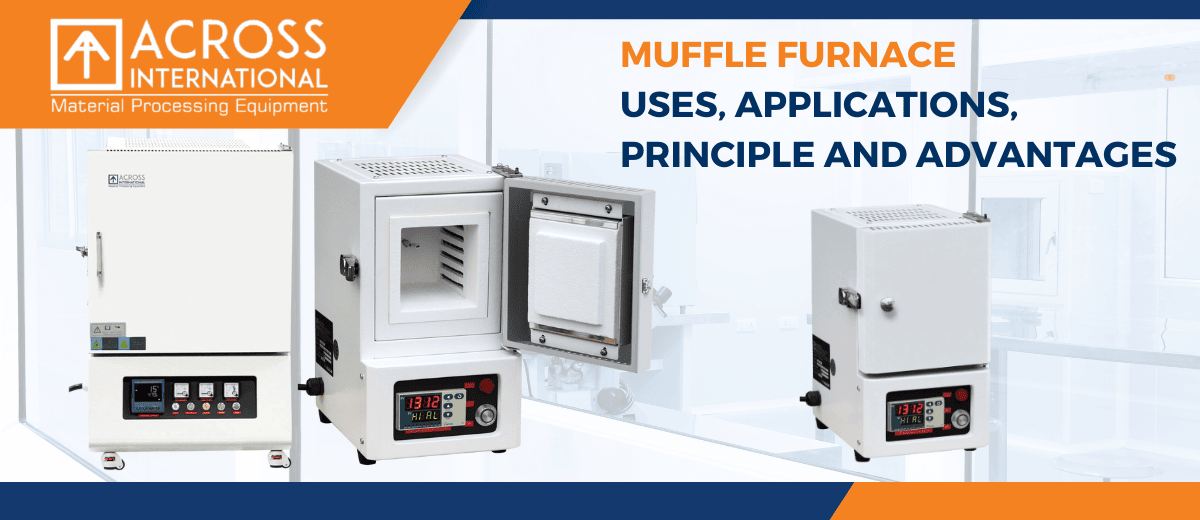
Muffle furnaces are a box type of heat treatment laboratory furnaces designed to change the physical and chemical properties of samples at very high temperatures. They are designed to isolate the material being processed from direct contact with heating elements providing uniform heating. The word “muffle” is defined as an insulated chamber which encloses the sample, and keeps it separate from the heating element.
Muffles are made from high-quality ceramic materials such as alumina or silicon carbide, which are capable of withstanding extreme temperatures and chemical reactions. Based on the process of producing heat, furnaces are divided into two categories such as combustion and electric types. In combustion types of furnaces, heat energy is directly produced by the burning of fuel whereas heat is produced by electrical power in electric types of furnaces. Recent years, electric muffle furnaces have been widely used over combustion type muffle furnaces due to safety, performance, and environmental concern. Muffle furnaces are widely used in research laboratories and small industries, from metallurgy to ceramic applications.
Electric Muffle Furnaces
Electric muffle furnaces are laboratory heating devices designed to achieve high temperatures and isolate the sample from direct contact with the heating element. This isolation assures a clean and controlled environment, making muffle furnaces crucial for such an application where a precise thermal condition is needed. Modern electrical muffle furnaces heat by convection, conduction or blackbody radiation process.
What are the Types of Electric Muffle Furnaces?
Electric muffle furnaces are categorized into various types such as tube furnaces, box furnaces, etc.,
Box Furnaces: Box Furnaces are the most commonly used furnaces due to their versatility and ease of use. The box furnaces are primarily used in small to medium sized industries and research laboratories. The common purposes of the electric box furnaces are annealing, sintering, and ashing.
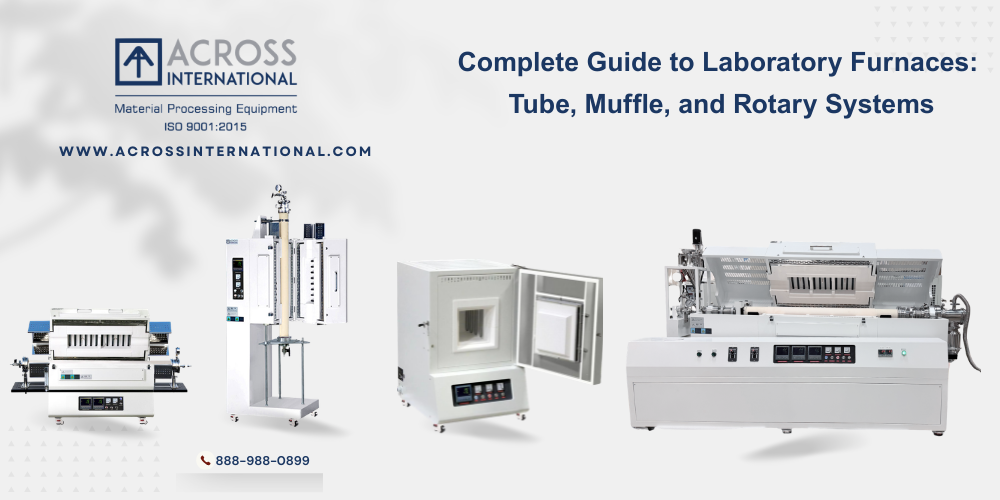
Tube furnaces: Tube furnaces are designed for continuous processing in situations where a high temperature environment is needed. Such furnaces are particularly famous in the material science and chemical industries. The common purposes for tube furnaces are calcination, thermal desorption, and catalyst research.
Significant Characteristics/Features of Electric Muffle Furnaces
Muffle chamber: The chamber is well insulated and designed to isolate the sample and the heating element. This ensures the controlled heat transfer via radiation and convection and prevents direct contact between the sample and the heating element.
Heating elements: Uses resistance-based heaters such as Kanthal (≤1,200 °C), silicon carbide and molybdenum di-silicide (1400–1800 °C) ensures uniform heating.
Insulation: Electric muffle furnaces are multi-layer insulated by ceramic fibers which control heat loss and enhance external safety.
Digital temperature control: For precision, muffle furnaces are equipped with digital temperature control system, PID controller for stable and uniform temperature, precise thermal cycle, and preventing overshooting.
High temperature ability: Depending on the model, the temperature of an electric muffle furnace typically ranges from 500 to 1800°C.
Safety interlocks: Featured by safety interlocks such as overheat limiters, circuit breakers and alarms, power shut off on door opening etc.
Controlled atmosphere: In the advanced model, some of the electric furnaces are featured by controlled options such as vacuum operation, inert gases passing, and reducing or oxidizing atmosphere, which prevent oxidation during a heat treatment.
Working Principle of Electric Muffle Furnaces
Electric muffle furnaces work on the principle of indirect heating. They use electric resistance (Kanthal) as a heating element which heats the chamber by convection, conduction, and energy radiation. The following are the step by step working principles of electric muffle furnaces:
Resistance heating: Electric current passes through the heating element generating heat by joule heating.
Indirect heat transfer: The generated heat is absorbed by the muffle chamber and then transferred to the sample through convection or radiation.
Thermal radiation and control: Thermocouples embedded in the chamber wall measure the temperature, and a PID controller compares the actual temperature with the setpoint and adjusts power to the heating element accordingly.
Heat retention: The chamber insulated by ceramic or alumina-based materials minimizes thermal loss.
Cooling (Natural or controlled): Once the desired temperature and processing time are reached, the heating element turns off and the furnace cools naturally or any controlled system such as forced air. Finally, the products are collected after cooling.
What are the Applications for Electric Muffle Furnaces?
Electric muffle furnaces are used in a dynamic range of applications in research laboratories and industries.
Industrial applications
Metallurgy: For processes like sintering, heat treatment of metals and ceramics, annealing.
Glassmaking and ceramics: Glazing and sintering
Chemical production: Synthesis of inorganic and organic compounds.
Laboratory applications: Laboratory testing, development of coating and ceramics, annealing, organic and inorganic chemical analysis, coal analysis, research facilities in chemistry, and many more.
Pharmaceuticals: Sterilization and pyrolysis of organic materials.
What Factors Affecting Electric Muffle Furnace Prices?
When purchasing the muffle furnace, pricing differs based on the various factors:
Heating element: SiC and MoSi2 increase durability and cost
Temperature range: Higher temperature models increase the cost
Control System: Digital programmable controllers add to the price.
Size and Capacity: Larger furnaces with higher volume chambers are priced higher
How to Choose the Right Electric Muffle Furnace for your needs?
It is necessary to select the right electric furnace for ensuring quality products, safety, reliability, and efficiency in laboratory and industrial operations. Whether you are doing heat treatment, conducting material testing, or sintering, furnaces must meet your process requirements. The following are some important key points that help you to choose the right electric furnace:
- Your required temperature range and application
- The insulation quality and energy efficiency
- Access to replacement parts and dependable maintenance services.
Recent Advancement in Electric Muffle Furnaces
Electric muffle furnaces have been a foundation for thermal processing in material research, metallurgy, ceramics, laboratories, and industries for a long period of time. But today’s muffle furnaces are more developed than just basic heating by incorporation of smart and energy efficient technologies. The following are the detailed explanations of modern modern muffle furnaces and their advantages:
Energy efficiency: Energy efficiency is important in a new furnaces design. The recent development includes the use of high-performance ceramic insulation to reduce heat loss, and optimized heating element positioning for faster and even heating.
Chamber design and advanced materials: The multizone chamber design for better control, improved refractory materials to resist thermal shock, and the heating elements SiC and MoSi2 for high temperature operation up to 1800°C support mere demanding applications, from ceramic sintering to high temperature alloy processing.
IoT and digital control system: The modern furnaces are equipped with Internet of Things (IoT) to monitor temperature in real time via mobile or desktop apps and receive alerts for abnormal conditions such as overheating. The touch screen interface and multi-segmented programmable controller ensures remote access and the automated control system.
Safety and compliance: To meet global safety standards, recent muffle furnaces are equipped with automated shutoff upon door opening, UL, CE, ISO certified, and over temperature system.
At Across International, we are proud to be at the forefront of this advance in building furnaces that deliver more than just heat. We deliver durability, precision, performance, and peace of mind.
If you're interested in knowing the details about muffle furnaces, Across International, the team will guide you to select the right furnace for your application.
Why Choose Across International Muffle Furnaces?
At Across International, we do not only manufacture muffle furnaces, but also, we engineer thermal solutions that help researchers and manufacturers to achieve accurate and consistent results. Whether you are performing high temperature sintering or heat treatment, our furnaces are designed with features of durability and the service you need to succeed.
Across International Muffle Furnaces
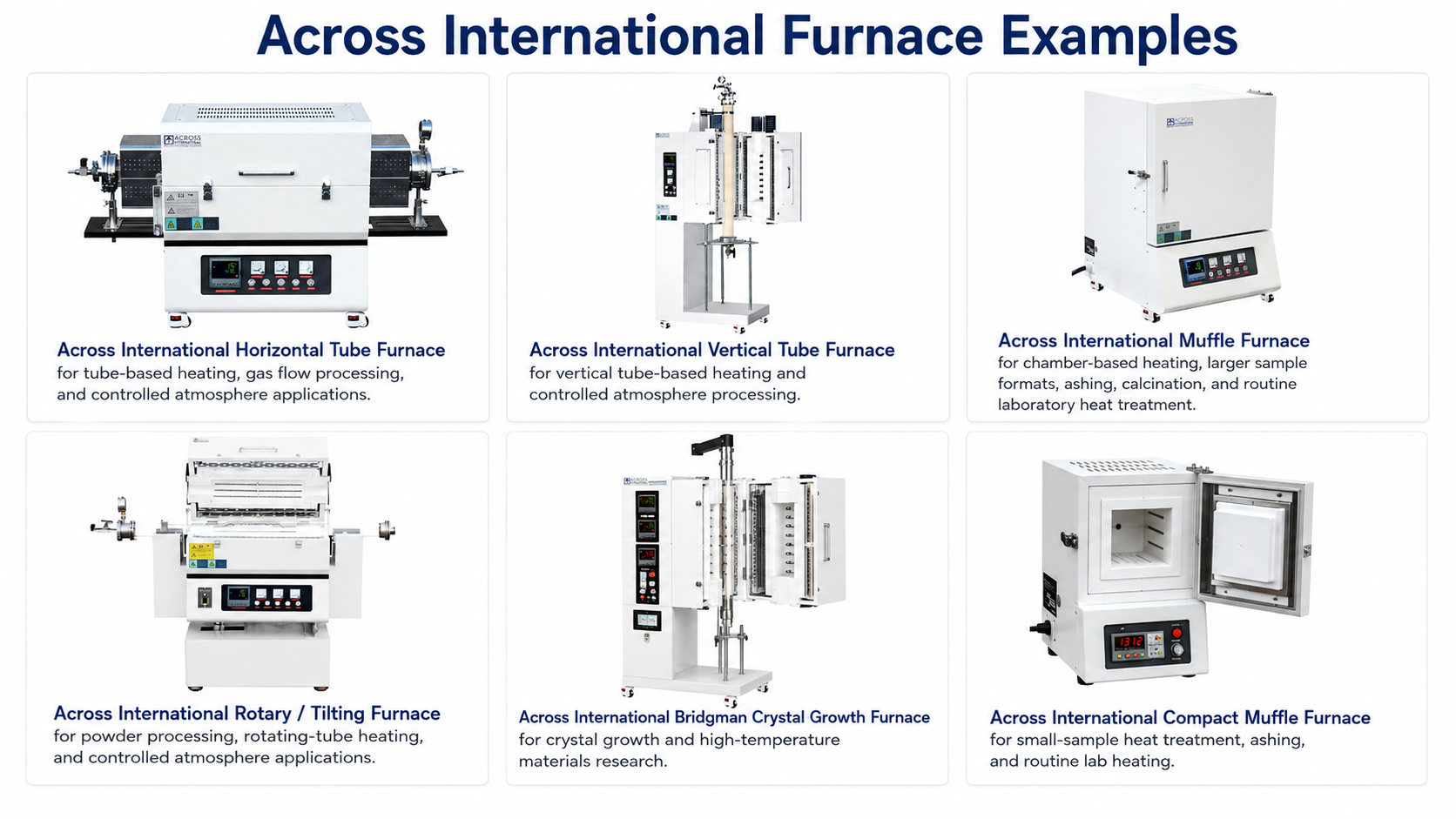
Across international muffle furnaces are available in various types based on the heating element, chamber size, digital control system, and safety and compliance certified for laboratory and small industrial applications. The following is the list of muffle furnaces:
|
Model |
Heating element |
Max. Working temperature |
Refractory lining |
Temperature controller |
Certification |
|
Resistance coil wire |
1050°C |
Mitsubishi (Japan) 1500 grade fiber alumina |
UDIAN 30-segment, single PID |
CE (Standard) |
|
|
Kanthal (Sweden) A1 2.0 resistance coil wire |
1200°C |
Mitsubishi (Japan) high quality 1500 grade fiber alumina |
Eurotherm 3204 Controller (UK) |
ETL tested to UL and CSA standards, CE |
|
|
Silicon Carbide (SiC) |
1400°C |
Mitsubishi (Japan) high quality 1600 grade fiber alumina |
Eurotherm 3204 Controller (UK) |
ETL tested to UL and CSA standards, CE (Standard) |
|
|
Molybdenum Silicide (MoSi2) |
1700°C |
Mitsubishi (Japan) high quality grade 1800 fiber alumina |
Eurotherm 3204 Controller (UK) |
ETL tested to UL and CSA standards (optional), CE (Standard) |
|
|
Molybdenum wire |
1700°C |
Furnace cavity: Mitsubishi (Japan) high quality grade 1800 morgan polycrystalline alumina fiber |
Eurotherm 3204 |
- |
|
|
Molybdenum Silicide (MoSi2), 6 installed |
1750°C |
Mitsubishi (Japan) high quality grade 1850 fiber alumina |
Eurotherm (UK) |
ETL tested to UL and CSA standards (optional), CE (Standard) |
Frequently Asked Questions (FAQs) About Muffle Furnaces
1. What is a muffle furnace and how does it work?
A muffle furnace is a high-temperature laboratory or industrial furnace designed to isolate samples from direct contact with heating elements. It works on the principle of indirect heating—using resistance heating elements (like Kanthal or MoSi₂) to transfer heat through convection, conduction, and radiation inside an insulated chamber.
2. What are the main applications of electric muffle furnaces?
- Heat treatment of metals and ceramics
- Ashing, annealing, and sintering
- Thermal desorption and catalyst research
- Pharmaceutical pyrolysis and sterilization
- Inorganic/organic compound synthesis
- Coal and material analysis in laboratories
3. What is the difference between box and tube muffle furnaces?
- Box Furnaces: Versatile, ideal for batch processing, and commonly used in small to medium industries.
- Tube Furnaces: Designed for continuous processes and preferred in chemical and materials science labs for controlled heating environments.
4. What temperature range do electric muffle furnaces support?
Electric muffle furnaces typically operate between 500°C and 1800°C, depending on the model and heating elements (e.g., Kanthal, SiC, or MoSi₂).
5. What heating elements are used in modern muffle furnaces?
- Kanthal wire (up to 1200°C)
- Silicon Carbide (SiC) (up to 1400°C)
- Molybdenum Disilicide (MoSi₂) (up to 1800°C)
6. What are the advantages of electric muffle furnaces?
- Precise temperature control with PID controllers
- Clean and contamination-free operation
- High energy efficiency with ceramic fiber insulation
- Advanced safety features (door interlocks, overheat protection)
- Option for controlled atmospheres (inert, vacuum, reducing)
7. How do I choose the right muffle furnace for my application?
- Required temperature range and application type
- Heating element type (Kanthal, SiC, MoSi₂)
- Chamber size and insulation quality
- Digital control system features (e.g., programmable PID)
- Certifications (CE, UL, CSA)
- Access to service and replacement parts