
Innovative materials play essential roles in safety, clean energy, transportation, human health, and industrial productivity. To fuel continued innovation, researchers want to deepen their understanding of the physical and chemical properties of materials (morphological, structural, magnetic, thermal, and mechanical) from the macro- to nanoscale. Whether discovering new materials, solving analytical problems, improving processes, or assuring product quality, electron microscopy can provide insight at all scales and modalities. The discoveries resulting from materials science research help enhance researchers’ ability to successfully correlate structural properties with functional performance. In turn, this insight helps commercial enterprises innovate products and processes to gain important time-to-market and cost advantages.
Materials science and engineering is a broad field that encompasses the study and development of all types of materials, including metals, ceramics, polymers, semiconductors, and composites. Materials scientists and engineers use a wide range of equipment to conduct their research and develop new materials and products.
Characterizing materials: This involves measuring the physical and chemical properties of materials, such as their composition, microstructure, and mechanical properties. Lab equipment used for characterization includes microscopes, spectrometers, and mechanical testing machines.
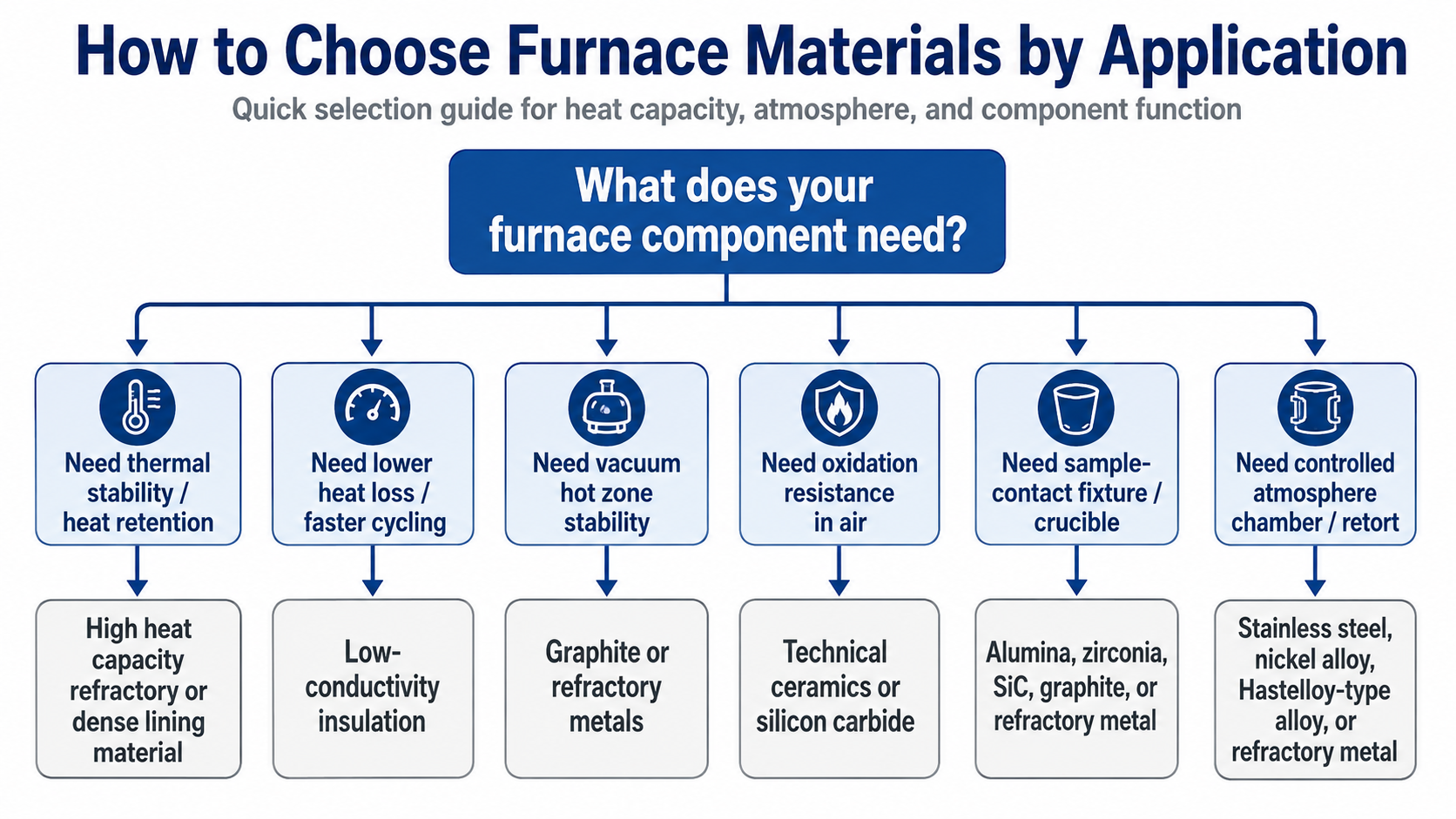
Processing materials: This involves using different techniques to change the shape, properties, or microstructure of materials. Lab equipment used for processing includes furnaces, rolling mills, and extruders.
Testing materials: This involves evaluating the performance of materials in different applications. Lab equipment used for testing includes fatigue testing machines, corrosion testing chambers, and fracture toughness testing machines.
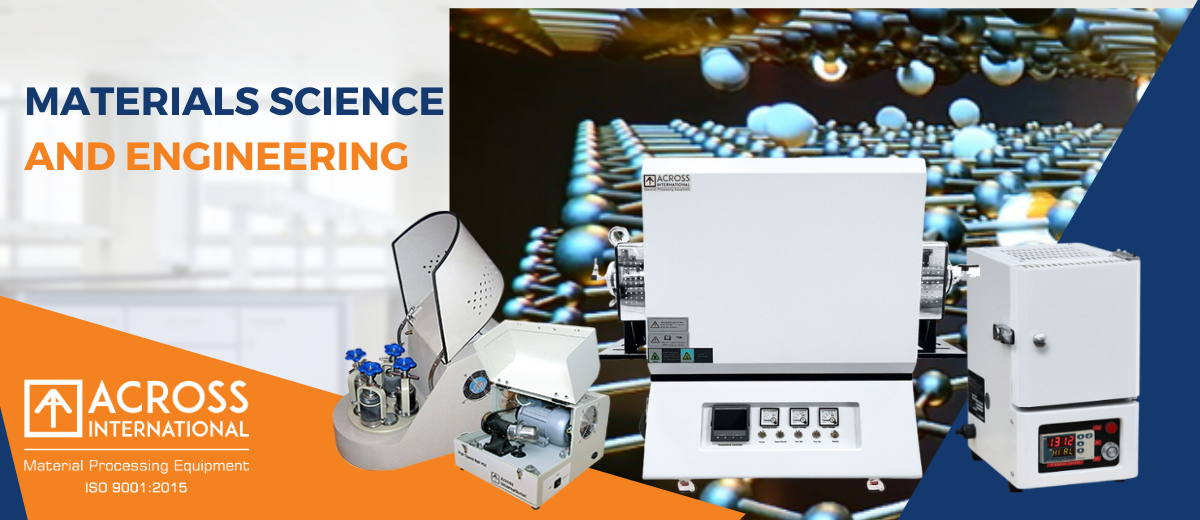
Some of the most common Across International labortry equipment includes:
Microscopes: Microscopes are used to view the microstructure of materials at different magnifications. This information can be used to understand how the microstructure affects the properties of the material.
Spectrometers: Spectrometers are used to measure the chemical composition of materials. This information can be used to identify the material and to understand how its composition affects its properties.
Mechanical testing machines: Mechanical testing machines are used to measure the mechanical properties of materials, such as their strength, ductility, and toughness. This information can be used to design materials for specific applications.
Furnaces: Lab Furnaces are used to heat materials to high temperatures. This can be used to melt materials, to anneal them, or to temper them.
Rolling mills: Rolling mills are used to reduce the thickness of materials by passing them between rollers. This can be used to produce sheet metal or wire.
Extruders: Extruders are used to force molten materials through a die to produce shapes, such as rods, tubes, and films.
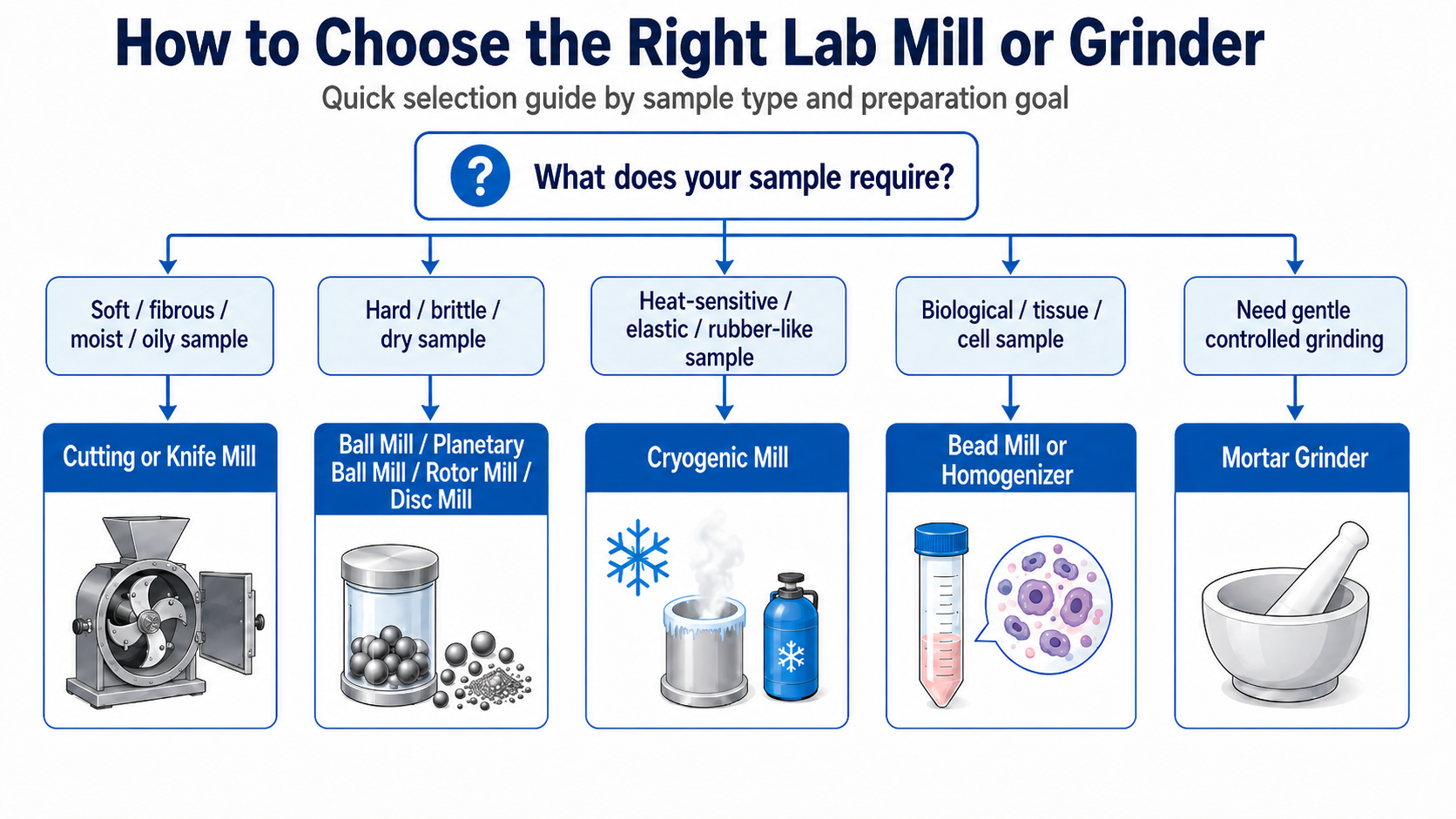
Ball Mills : Ball mills are a type of grinding equipment used in materials science and engineering to grind and blend bulk materials into micrometer or nanometer size. They work by impact and attrition, as the balls collide with each other and with the material being milled.