
Reduce Process Times and Optimize Results with FlackTek™!
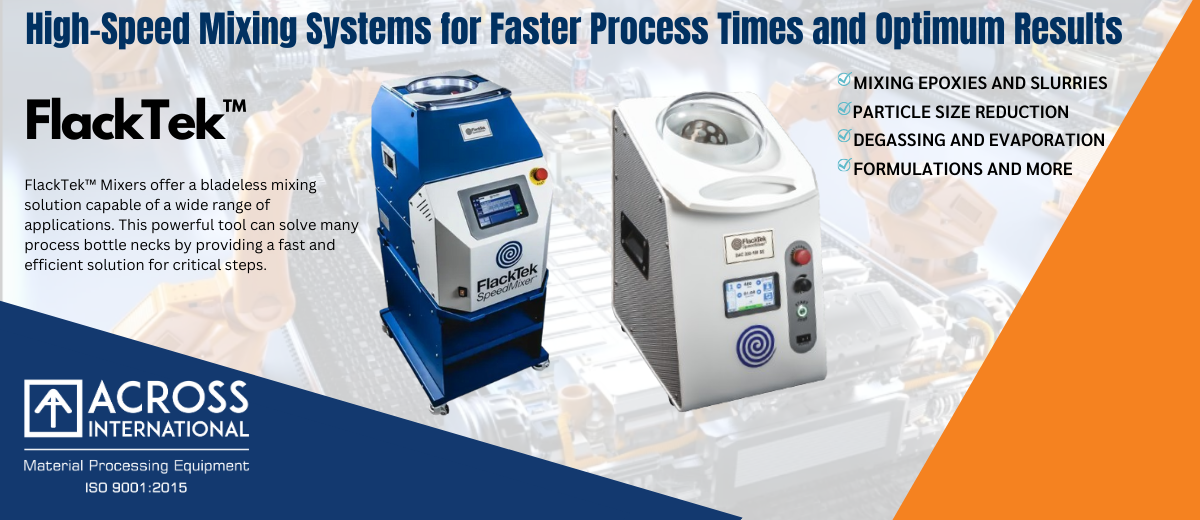
Dual asymmetric centrifugal processing systems provide a bladeless mixing solution that is capable of creating high RPM and high G-force in order to rapidly achieve process goals. What used to take 5 hours now takes 5 minutes. No bubbles, no cleanup, and perfectly repeatable.
These systems are ideal for mixing epoxies and slurries, degassing and evaporation, formulations, emulsifications, infusions, particle size reduction, and much more.
Popular Industries:
--Adhesives & Sealants
--Defense
--Battery Technology
--Cannabis
--Chemical
--Electronics
--Energetics
--Inks and Coatings
--Medical Devices
--Personal Care
--Cosmetics
--Pharmaceuticals
--Polyurethanes
--Research, Academia
--Silicones
What is a DAC?
Dual asymmetric centrifugal mixers are also commonly referred to as high-speed mixers, centrifugal mixers, or planetary mixers, but all describe the same type of machine. What makes this technology revolutionary is that it utilizes two axes of rotation, in opposite directions, creating high centrifugal acceleration across different planes. This allows materials to be mixed without the use of a blade, the high centrifugal force can also compress air bubbles out of material with ease.
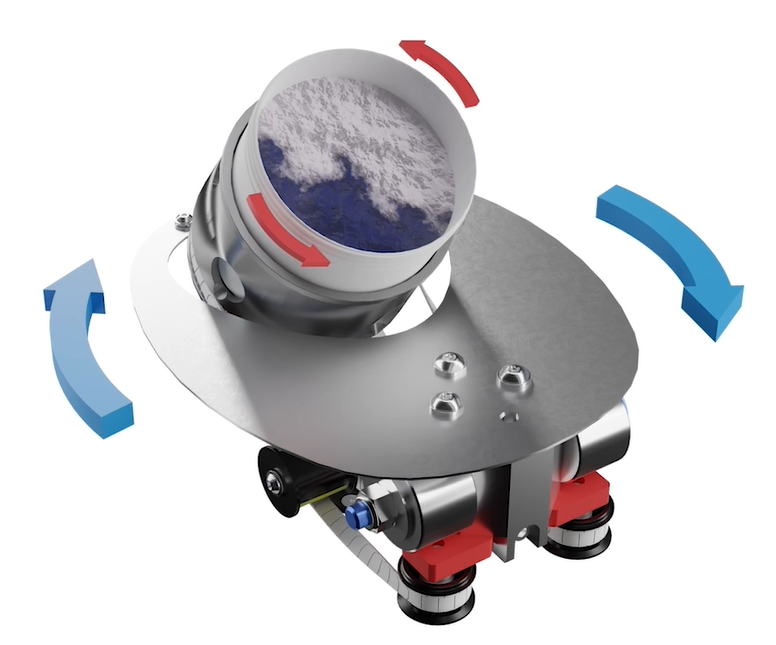
By eliminating the physical use of a blade, we not only reduce the contamination risks associated with traditional invasive mixing, but also eliminate the laborious task of cleaning blades and impellers.
Challenges and Solutions Across Industries:
Repeatable Results: Consistent mixing for bonding procedures and sealants. Mixers provide consistent, bubble-free mixing of common adhesives like Hysol EA9394 and RTV560.
Bubbles: Unreacted two-part adhesives can contaminate space. Vacuum mixers reduce volatile materials, ensuring sensor cleanliness during flight.
Agglomerations: Mixing high surface area fillers into adhesives can be difficult. These mixers maintain sag/dripping during use and ensure optical clarity.
Electronics:
Processing Time: Creating slurries, pastes, and binders is time-consuming. High-speed mixing technology reduces time and labor, providing a homogeneous product quickly.
Agglomerations: Dispersing powders into varying slurries or pastes. These mixers improve the quality and performance of electronic components by achieving excellent homogeneity.
Shelf Life: Improper mixing can lead to fillers and additives settling over time. Consistent dispersion prevents settling, ensuring long-term stability.
3D Printing:
Powder Dispersion: Dispersing high surface area modifiers like fumed silica. Mixers enable rapid and uniform powder distribution, crucial for R&D printing.
Modifying Resins: Unable to modify off-the-shelf resins for adequate performance. Users can adjust resins with any material without bubbles, ensuring perfect replicability.
Agglomerations: Ensuring consistent, high-quality print materials. Efficient processing prevents agglomerates.
Optimized Solutions:
Units can be offered with capacities from 300 grams up to 20 KG, featuring a wide range of accessories and configurations. Below are some popular differentiations and topics to discuss when looking to optimize your processes.
Vacuum vs standard systems- A standard dual asymmetric mixer is designed to operate at normal atmosphere and has no sealed chamber, or way to alter the standard atmospheric conditions. For many applications the use of vacuum is not needed and a standard system will work well (some examples are powder into powder, particle size reduction, and infusions). In more demanding applications, vacuum is often needed to help remove gases or to protect the sample from oxygen. When this need arises, a dual asymmetric mixer that has vacuum capabilities is required. These units have a slightly different configuration than a standard model, this allows for the chamber to be sealed and vacuum pulled, as well as provides controllers to regulate vacuum depth and duration.
Material dispensing- Once mixing is done, how is the material transferred to the next stage? In some instances epoxies and adhesives can be very viscous and difficult to remove, or a sample may be very sensitive, and minimal handling is ideal. In situations like this, FlackTek™ provides custom solutions for dispensing materials. Covering everything from custom holders that can accommodate vials, tubes, and applicators, all the way to material transferring solutions.
To learn more about FlackTek™ solutions and how they can improve your processes, please reach out to our technical sales team for further support.
https://www.acrossinternational.com/shop-product-by-categories/ball-mills/dual-asymmetric-centrifugal-mixers.html